Step 1
Keep all properties in one portfolio view
Short-term and long-term properties appear in the same portfolio so you have one operating view across the entire business. No switching between tools to see what is happening across all your rentals.
Mixed short-term and long-term rental management
Most operators who run both short-term and long-term rentals end up with two separate back-office setups: different tools, different spreadsheets, and a growing reconciliation problem every month. Keylio is built for this exact situation. Revenue, expenses, documents, and property records stay in one operating system while still respecting the real differences between booking-based and lease-based operations.
Many owners start with one rental model and add the other later. A long-term landlord adds an Airbnb unit. An STR operator locks in a long-term tenant during off-season. The result is usually two tool stacks, two reporting habits, and a growing amount of duplicated admin work that was never planned for.
Keylio keeps one portfolio, one financial workflow, and one document system while allowing revenue and document context to behave differently for bookings and leases. Adding a long-term unit to a short-term portfolio does not require building a second back-office stack. Both types run in the same system from day one.
Step 1
Short-term and long-term properties appear in the same portfolio so you have one operating view across the entire business. No switching between tools to see what is happening across all your rentals.
Step 2
Expense tracking, receipt capture, and document storage work the same way for a nightly rental as for a long-term lease. The process does not change based on property type - only the revenue source and document context do.
Step 3
STR revenue entries link to bookings and show channel source, stay dates, and payout timing. Long-term revenue entries link to leases and reflect monthly rent schedules. Both live in the same ledger so your accountant gets one clean view of the whole portfolio.
Keylio displays short-term and long-term rental properties in the same portfolio view so the back-office record of the whole business stays in one place.
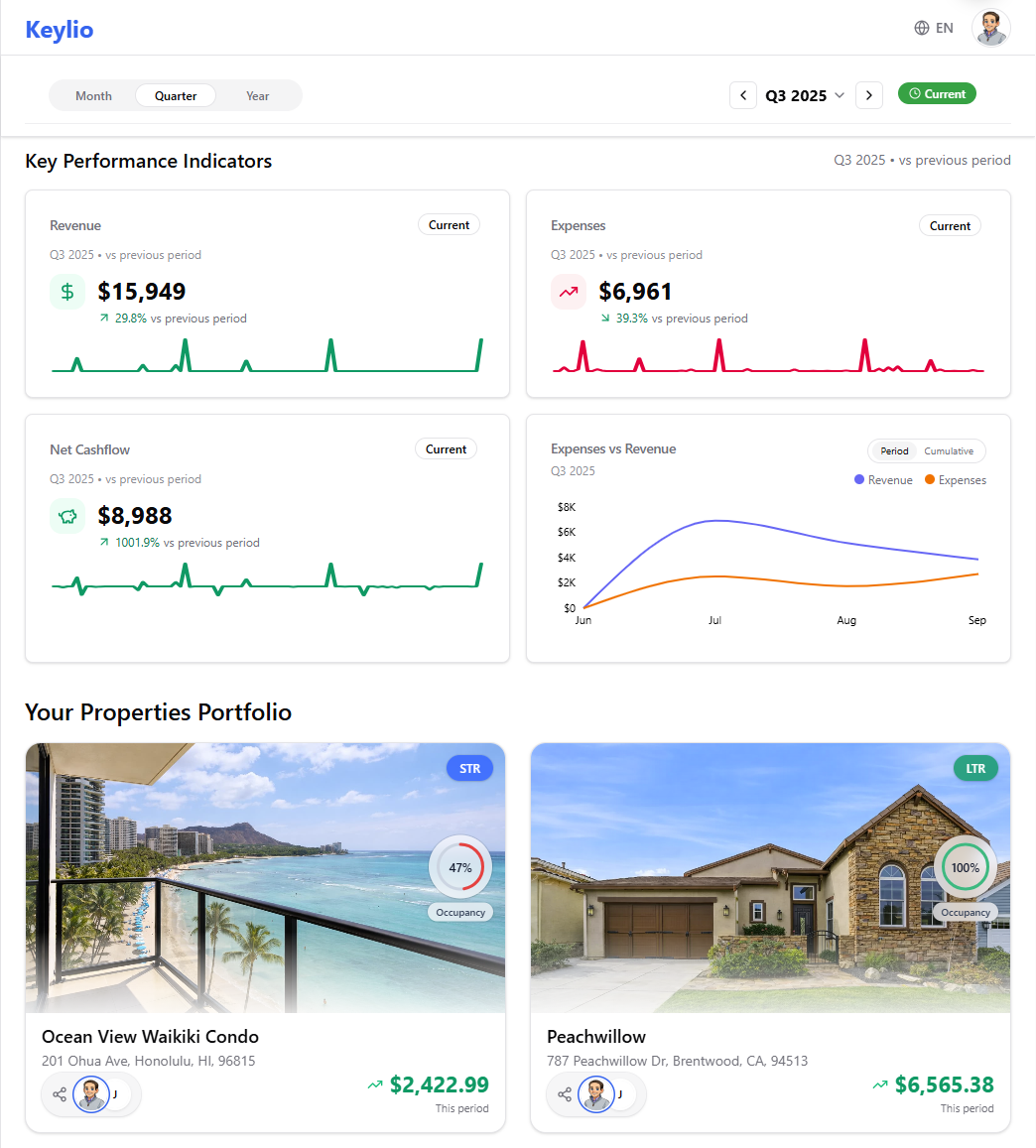
Yes. Keylio is designed for operators who manage both models at the same time and need one back-office system rather than separate tools for each property type.
No. The expense and receipt workflows are shared across the portfolio regardless of property type. A repair to an Airbnb unit and a repair to a long-term rental unit follow the same process - you just select the correct property when logging the expense.
When your records are split across two tools, every month-end review requires logging into both systems, exporting two reports, and reconciling them manually. Adding one more property means deciding which system it goes into and whether that changes anything downstream. Keylio eliminates that decision - every property type uses the same expense tracking, document storage, and revenue review regardless of how it is rented.
Yes. STR revenue entries link to bookings and track channel source and payout timing. Long-term revenue entries link to leases and track monthly rent. Both live in the same ledger so the portfolio-level view is always accurate.
Yes. The document workspace supports guest-file views for short-term rental operations and tenant-file views for long-term leases. Both types of records stay organized in the same system without requiring separate document stores.
That is exactly the use case Keylio is built for. You do not need a large portfolio to benefit from having both properties in the same system. Even with two properties of different types, keeping expenses, revenue, and documents unified means your records are clean and your accountant only needs one export.
Keylio works best when expenses, receipts, booking revenue, and documents live in the same operating system. Use these related pages to see the adjacent workflow.
Most rental operators lose track of expenses the same way: the receipt goes into a phone photo, the vendor gets paid, and three months later nobody can remember which property the repair was for. Keylio keeps every expense tied to the property it belongs to, backed by the receipt that supports it, and categorized consistently so your accountant gets a clean ledger instead of a shoebox. The same workflow covers Airbnb rentals, long-term leases, and mixed portfolios.
Expense trackingAirbnb payouts are typically released after check-in, but the money that reaches your bank still has to be reconciled against bookings, platform fees, taxes, co-host payouts, and any adjustments. For operators managing multiple properties or overlapping reservations, matching deposits back to the correct stay can quickly become time-consuming and error-prone.
Booking revenue syncUse Keylio to keep Airbnb rentals and long-term leases in one system for expenses, revenue review, documents, and day-to-day administration - so you stop maintaining two back offices for one business. Free to start, no credit card required.